
Breastfeeding 101: What to Expect in the First Few Weeks

Breastfeeding your newborn is one of the most intimate ways to bond, provide perfect nutrition, and support their rapid growth. But let’s be real, the first few weeks can feel overwhelming. Your body is adjusting to making milk, your baby is learning to eat, and everyone is running on little sleep. The good news? Most challenges improve quickly with the right basics and support. Here’s a straightforward guide to help you navigate it all, including how feeding patterns tie directly into those precious, and sometimes elusive sleep stretches.
Latching Basics: The Foundation of Comfortable Feeding
A good latch is everything. It helps your baby get enough milk, prevents pain for you, and sets up successful breastfeeding. The goal is for baby to take in a big mouthful of breast, not just the nipple, so milk flows well.
• Position baby tummy-to-mommy with you, ear-shoulder-hip in a straight line.
• Support your breast with your hand (like a C-hold) if needed.
• Wait for a wide-open mouth, like a yawn, then bring baby in quickly so their chin touches the breast first, bottom lip flanged out.
• Baby’s mouth should cover more of the areola below the nipple than above, lips turned out, cheeks rounded.
It should feel comfortable, like a gentle tug, not pinching. If it hurts, break suction with a clean finger and try again. Many moms need a few tries to get it right!
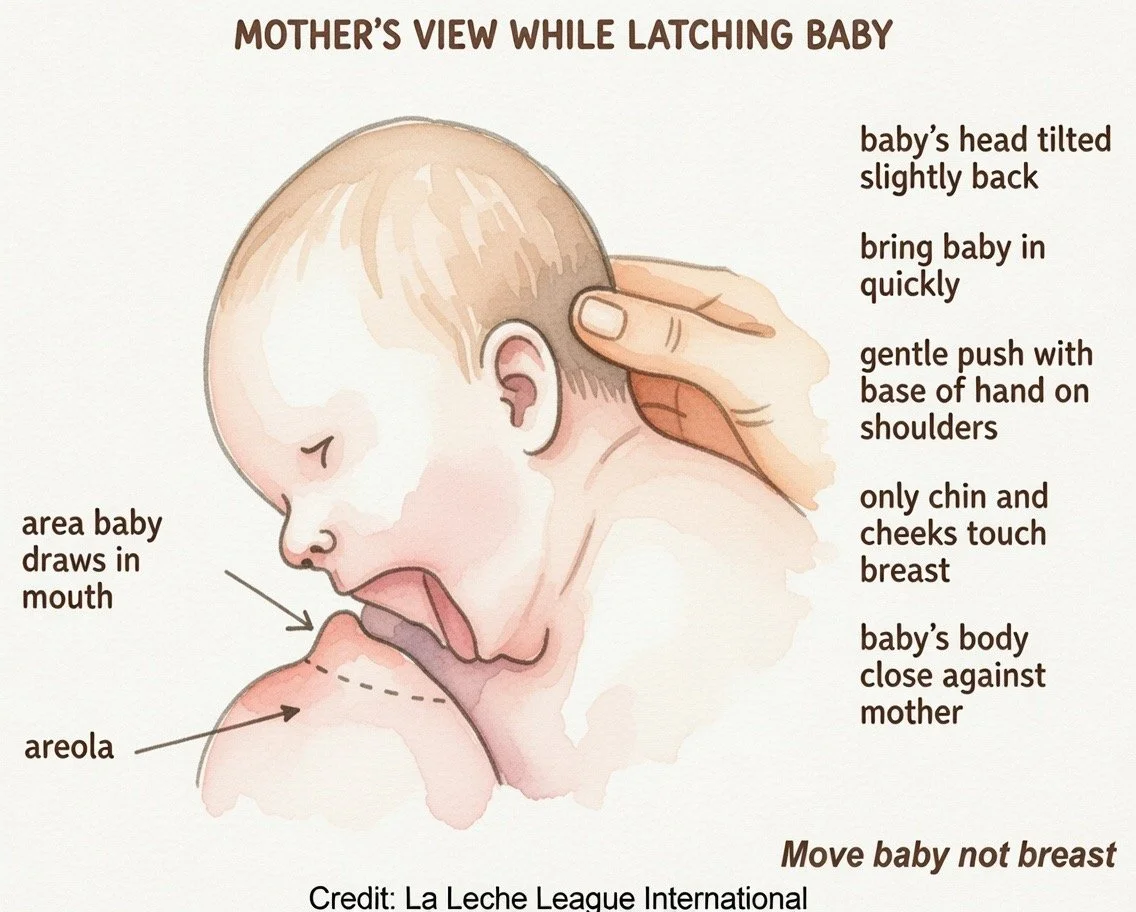
Credit: La Leche League International
Cluster Feeding: Why Your Baby Wants to Nurse Non-Stop
Around days 2-5 your milk typically “comes in”, and again during growth spurts which are often arouond 3 weeks, 6 weeks and 9 weeks, babies often cluster feed, nursing frequently in short bursts, especially in the late afternoon and evening. This might look like feeds every 30-60 minutes for several hours.
It’s normal and purposeful: It ramps up your milk supply to match baby’s growing needs and provides comfort. Cluster feeding can make evenings feel endless, but it often leads to longer sleep stretches afterward as baby gets a belly full of fattier hindmilk.
Signs of Good Milk Transfer: Is Baby Getting Enough?
You don’t need to count ounces, watch these reassuring signs:
• 6+ wet diapers and 3-4+ poopy ones daily by day 5-7.
• Baby swallows regularly during feeds. You’ll hear soft “kah” sounds after the initial sucks.
• Breasts feel softer after feeding.
• Baby seems content and satisfied post-feed, with steady weight gain, with the goal of being back to birth weight by 10-14 days, then gaining approximately 0.5–1 oz per day.
• Alert periods and good skin tone.
Frequent feeds in the early weeks build your supply. Your baby’s sucking is the best way to tell your body how much milk to make.
Common Challenges and How to Handle Them
Sore Nipples
Mild tenderness is common at first as nipples toughen up, but sharp pain, cracking, or bleeding usually means latch needs tweaking. Try different positions such as cradle, football, laid-back, use lanolin or hydrogel pads, and air-dry after feeds. Pain that lasts the whole feed or doesn’t improve would warrant reaching out to a breastfeeding specialist or an IBCLC for a latch assesment.
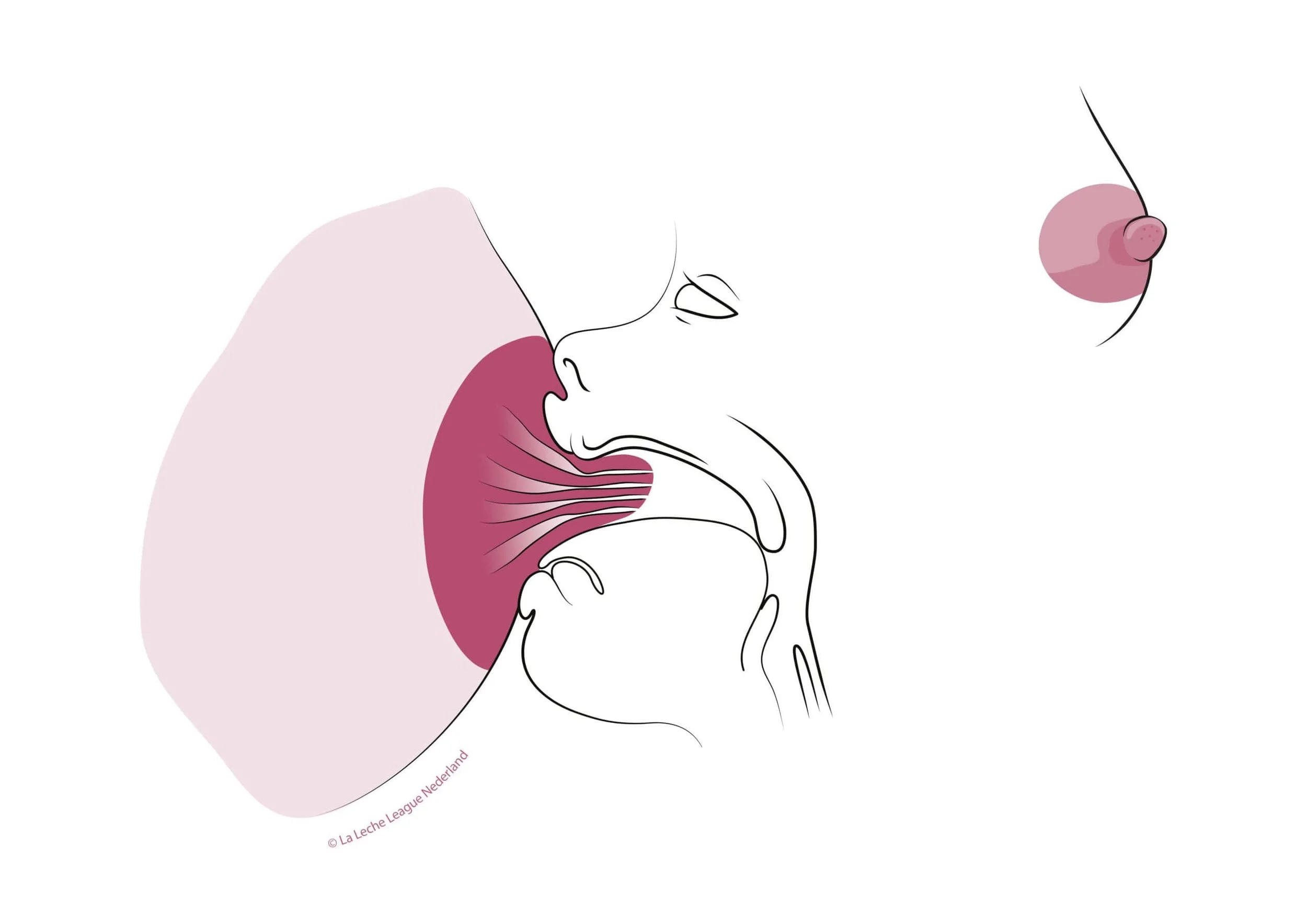
Credit: La Leche League Nederland
Engorgement
When milk comes in (~days 3–5), breasts can feel rock-hard, full, and tender. Frequent feeding or hand expression softens them so baby can latch easier. Cold packs between feeds help; warm compresses before can encourage flow.
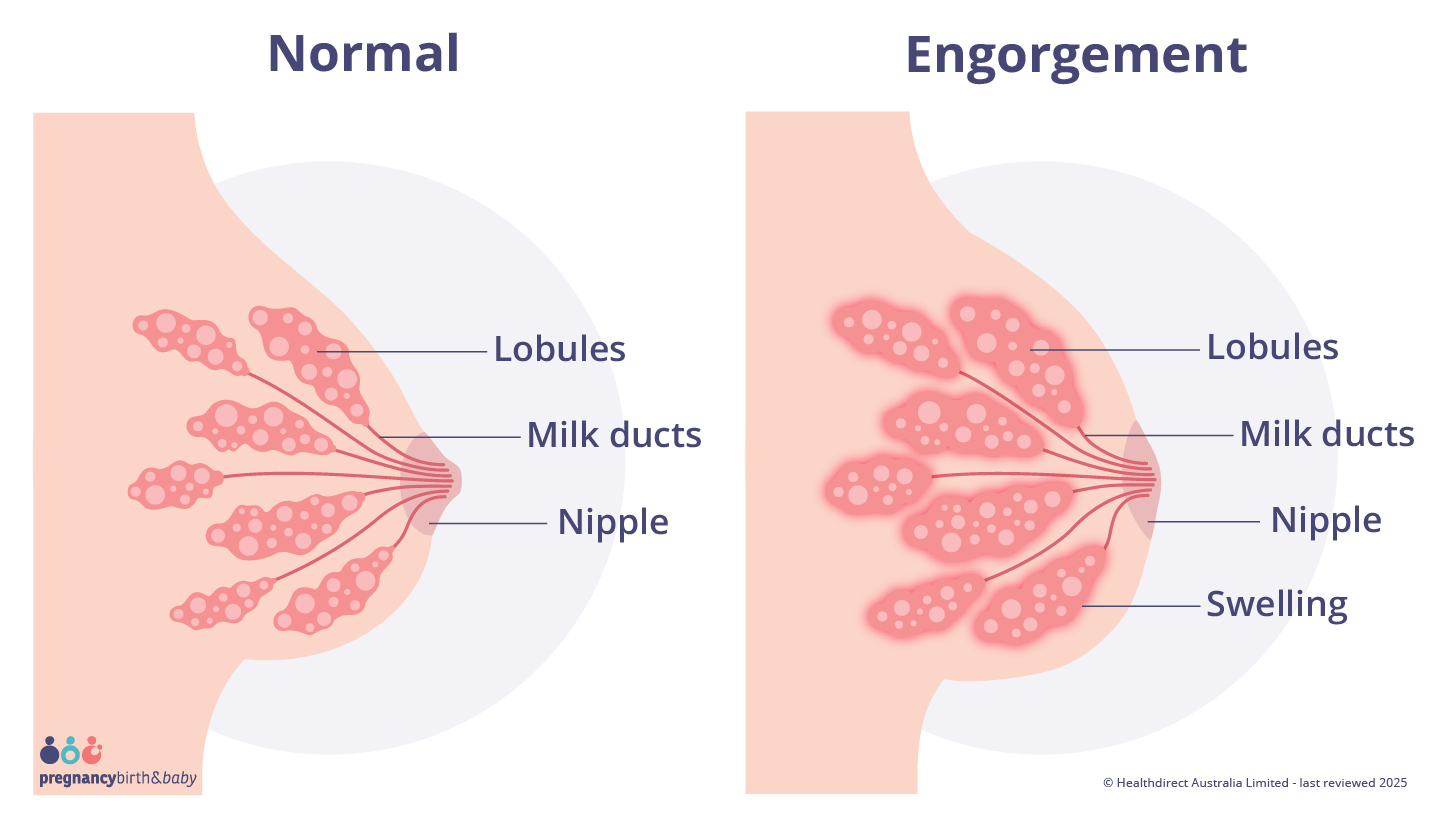
Credit: Pregnancy Birth & Baby
Other hiccups like plugged ducts or low supply worries often resolve with frequent nursing and good latch.
When to Seek Lactation Help
Don’t wait if things feel off, early support makes a huge difference. Contact an IBCLC (International Board Certified Lactation Consultant), midwife, or pediatrician if:
• Pain is severe or persists beyond the first week.
• Nipples are cracked or bleeding.
• Baby isn’t gaining weight well or has fewer than expected diapers.
• You suspect thrush (shiny, white patches in baby’s mouth, burning nipples).
• Engorgement doesn’t ease with feeding.
Many hospitals offer free or low-cost consultations, and groups like La Leche League provide peer support.
How Feeding Impacts Newborn Sleep Patterns
Feeding and sleep are deeply connected in these early weeks. Newborns have tiny tummies, so they need to eat every 2-3 hours, or more during clusters, which means frequent night wakings. Cluster feeding in the evening often precedes a slightly longer stretch of sleep, as baby gets calorie dense milk to tide them over.
Frequent, effective feeds help establish your supply and prevent overtiredness from hunger cries. As your baby grows and milk supply stabilizes, many see gradually longer stretches of sleep at night, though every baby is different. Hang in there; responding to cues now pays off in better routines later.
Breastfeeding gets easier every day. You’re doing an amazing job nourishing and comforting your little one. Trust your body, watch your baby’s signals, and lean on support when needed. You’ve got this!
(Always check with your pediatrician or lactation consultant for personalized advice. Sources include CDC, AAP, La Leche League, and Mayo Clinic guidelines.)
What breastfeeding wins or hurdles have you faced in those first weeks? Drop a comment—I’d love to cheer you on!